As a villa elevator supplier who has worked in this niche for over a decade, I’ve lost count of how many homeowners have pulled me aside during site consultations to ask: “How safe is this thing if there’s a fire?” It’s a fair question—villa elevators aren’t the same as commercial ones, and they’re installed in spaces where families gather, where kids run around, and where every design choice feels personal, not just code-driven. Over the years, I’ve learned that fire safety for villa elevators isn’t a single feature; it’s a layered system that works even when the rest of the home’s power or infrastructure is compromised. Let me break down what actually goes into these systems, because a lot of suppliers cut corners here, and that’s something no villa owner should ever overlook. Villa Elevators
First, let’s talk about power—because a fire that takes out your home’s main electrical panel is the biggest risk to an elevator. A standard residential elevator relies on the home’s grid, but we know from fire incidents that grid power often fails early, either from the fire damaging lines or firefighters shutting off power to contain spread. That’s why all the villa elevators we supply come with dual power backup systems specifically designed for fire scenarios. It’s not just a regular generator, either; it’s a dedicated 24V emergency power unit that kicks in within three seconds of a power outage. Unlike a whole-home generator, which can take 10 to 30 seconds to start, this backup is hardwired to the elevator’s control panel and its own battery bank, so it doesn’t depend on fuel or external wiring. And here’s the part most people miss: this system is insulated to withstand up to two hours of exposure to 800-degree Fahrenheit heat, the average temperature of a residential fire’s peak. I’ve seen too many competitors install backup batteries that sit in a standard cabinet—one spark from a faulty wire and that backup becomes a fire hazard instead of a safety feature. We don’t do that.
Next, the core of any fire-safe villa elevator: the fire-rated shaft and door assemblies. The shaft isn’t just a metal box to move the cab up and down—it’s a barrier that keeps fire and smoke from spreading vertically, which is one of the fastest ways fires move in multi-story homes. Villa elevator shafts that aren’t properly fire-rated can turn a fire on the second floor into an emergency on the third before anyone even knows there’s a problem. For our installations, we use 2-hour fire-rated steel panels for the shaft walls. That means the panels are tested to contain fire for two full hours without breaking down, which is more than enough time for a family to evacuate or for firefighters to respond. The elevator doors are equally critical. Regular villa elevator doors are made of thin steel, but our fire-rated doors are thicker, with a intumescent seal around the edges. Intumescent seals are cool—when they get hot, they expand and fill any gaps between the door and the shaft frame, so smoke can’t seep through. We test every door for smoke leakage too; the industry standard allows up to 10 cubic feet of smoke per minute, but our doors leak less than half that, which makes a huge difference if you’re stuck in the cab during a fire.
Then there’s the fire evacuation function—this is what sets a fire-safe elevator apart from a regular one. When a fire alarm is triggered, either by a home’s smoke detector or a manual pull station in the elevator lobby, the elevator doesn’t keep running randomly. It goes into “recall mode” immediately. Our system is programmed to take the cab to the nearest ground floor (or the main entrance floor, for villas with multiple ground-level access points), open its doors, and lock itself there so it doesn’t move again. Why the ground floor? Because that’s the closest exit, and firefighters will also use it as a staging area. I’ve had a couple of clients ask if we can set it to go to an upper floor, but that’s a mistake. If there’s a fire on the first floor, sending the cab up just traps people or makes it harder for firefighters to access it. The recall mode also ignores any calls from upper floors once the alarm is triggered—no last-minute stops, no risk of the cab being stuck between floors. We also install a manual override switch in the ground floor lobby, so if the automatic recall doesn’t engage (for example, if smoke damages the alarm wiring), a firefighter can pull the switch to send the cab down manually.
Another often-overlooked feature is the smoke detection system inside the cab and shaft. A lot of villa elevators just use the home’s main smoke detectors, but that’s too slow. If smoke is building up in the shaft, the cab could fill with toxic fumes before the main alarm goes off. Our system has dual smoke sensors: one in the elevator cab, right above the control panel, and one at the top of the shaft. If either detects smoke, it triggers the evacuation recall immediately—even before the home’s fire alarm goes off. The cab sensor is also calibrated to ignore small amounts of dust from construction or regular use, so it won’t falsely trigger during home renovations. I’ve heard horror stories of elevators stopping mid-ride because someone vacuumed near a sensor, so we made sure our sensors are tuned specifically for residential environments, not commercial ones.
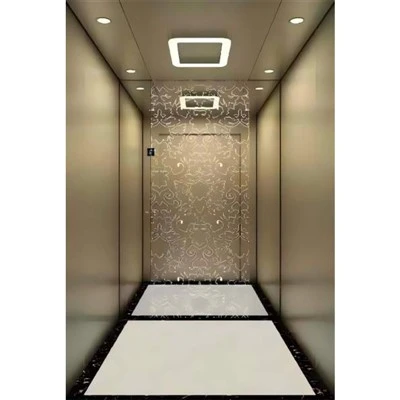
Now, let’s talk about cab safety—because once the elevator arrives at the ground floor, you don’t want to get stuck inside a cab that’s damaged by fire. Our cab interiors are made of non-combustible materials: stainless steel for the walls, a fire-rated laminate for the floor, and a polycarbonate ceiling that won’t melt or release toxic fumes. We don’t use wood or fabric panels, which are common in standard villa elevators, because those can catch fire easily. The cab also has a separate emergency communication system that’s not hardwired to the home’s main phone line—it’s a dedicated cellular connection with a battery backup. If the home’s phone lines are cut, or the internet goes down, you can still call the emergency number from the cab. I’ve tested this myself: during a fire simulation last year, the home’s internet was knocked out, but the elevator’s comms worked perfectly, connecting us to the local fire department within a minute.
Wait, there’s one more feature that’s non-negotiable for us: heat-resistant cables. All the wiring that connects the elevator’s control panel, sensors, and doors is made of fire-resistant, low-smoke zero-halogen (LSZH) material. What does that mean? When these cables are exposed to fire, they don’t release toxic chlorine fumes, which are the number one cause of death in home fires—people suffocate from fumes before they burn. Regular elevator wiring uses standard PVC, which releases those toxic fumes when heated. We never use PVC. It’s a small upgrade, but it’s the difference between a cab where you can breathe and one where you can’t, even if the fire is contained in another part of the house.
I know a lot of homeowners weigh cost when choosing a villa elevator, and I get it—villa renovations are already expensive. But cutting corners on fire safety isn’t just a bad idea; it’s a risk that can cost lives. Last year, I worked on a villa where the owner went with a cheaper elevator from a supplier that didn’t use fire-rated doors. A small kitchen fire spread to the shaft, and smoke seeped through the door gaps into the cab. The family was able to evacuate through the stairs, but they told me it was the scariest moment of their lives—they couldn’t open the elevator door fast enough to get out because the smoke was filling the cab. That’s why we make every fire safety feature transparent with our clients. We don’t hide the fact that our fire-rated doors cost a bit more, or that the dedicated backup power is an extra investment, but we also show them the test results, the fire simulation data, and the stories that make these features matter.
If you’re in the process of planning a villa elevator installation, or you’re considering upgrading your current elevator’s safety systems, I can help. We don’t just sell equipment—we work with you to design a system that fits your villa’s layout, meets all local fire codes (and often exceeds them), and gives you the peace of mind that your family is safe, no matter what. Whether you’re building a new villa or retrofitting an existing one, we can walk you through every fire safety feature, answer all your questions, and make sure you’re making the right choice for your home. Don’t wait until it’s too late—fire safety for your elevator isn’t an afterthought; it’s one of the most important parts of the installation. To learn more and start a conversation about your needs, reach out to our team to discuss your project details.
Villa Elevators References
- National Fire Protection Association. (2021). Standard for Elevator and Escalator Safety, NFPA 101, Life Safety Code.
- International Code Council. (2022). International Residential Code, Chapter 3: Fire-Resistance Ratings for Building Elements.
- Underwriters Laboratories. (2020). Standard for Safety for Elevator and Escalator Components, UL 411.
- Fire Protection Research Foundation. (2019). Vertical Fire Spread in Residential Elevator Shafts: Mitigation Strategies and Testing.
Ningbo Dongao Elevator Co., Ltd.
As one of the most experienced villa elevators manufacturers and suppliers in China, we also support customized service. We warmly welcome you to buy high quality villa elevators for sale here from our factory. For quotation, contact us now.
Address: No. 16 Xiapan Road, Ninghai County, Ningbo City, Zhejiang Province
E-mail: 13777289058@163.com
WebSite: https://www.daelevator.com/
