Hey everyone, it’s Jake from the powder filling line team here, and today I’m answering one of the most frequent questions I get from new packaging partners—“What’s the maximum filling weight your complete powder filling bottling lines can handle?” Fair question, right? If you’re running a plant that deals with everything from protein powder and spices to industrial chemicals or pharmaceutical excipients, getting the weight right isn’t just about fitting more product per bottle; it’s about accuracy, speed, and not wasting an arm and a leg on overfilled containers or underfilled ones that get sent back. Let’s cut through the jargon and break this down like I would over a coffee with a new client. Complete Powder Filling Bottling Lines
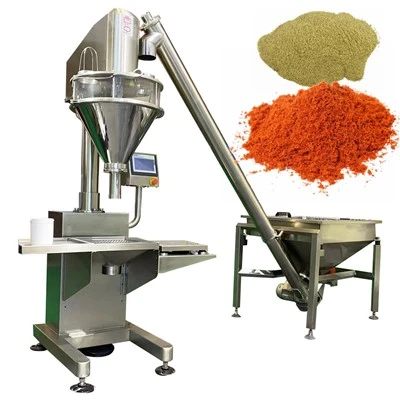
First off, let’s get one thing straight: there’s no one-size-fits-all number here. I’ve seen people online say “our lines go up to 50 lbs” or “they cap at 100 kgs,” but that’s usually for a super specific, custom setup—not the standard lines we build for most small to medium or even large-scale operations. The real max weight depends on three big factors: the type of powder you’re running, the bottle/container size you’re filling into, and the accuracy requirements your facility has. Let’s dive into each, because that’s where the confusion comes in.
First, powder characteristics. This is non-negotiable, and I swear by this rule—ignoring the powder’s properties is how you end up with a line that jams every 20 minutes or can’t hit weights over 10 lbs, even if you wanted it to. For example, if you’re filling a light, fluffy powder like baby formula or matcha, that’s a low-density powder—like 0.2 to 0.5 grams per cubic centimeter (g/cc). Fluffy powder takes up way more space per ounce, right? So a 1-lb bottle of matcha is way wider and taller than a 1-lb bottle of dense flour or powdered laundry detergent, which is around 0.6 to 0.8 g/cc. Then there’s the really dense stuff: things like metal powders, pharmaceutical APIs (active pharmaceutical ingredients), or dry chemical blends that clock in at 1.0 to 1.8 g/cc. Those are tight, heavy, so you can fit way more mass into the same bottle volume.
Why does this matter for max weight? Let’s do a quick example. Suppose you have a 1-gallon (3.785-liter) bottle. For fluffy matcha (0.3 g/cc), the maximum weight you could fit into that bottle is roughly 1.135 kg, or ~2.5 lbs. For dense flour (0.7 g/cc), that same bottle would hold around 2.65 kg, or ~5.8 lbs. For that heavy metal powder (1.5 g/cc), it’s almost 5.7 kg, or ~12.5 lbs. That’s a huge range, all from the same bottle size. Now, if you had a way bigger container—like a 55-gallon drum for industrial powder—obviously the numbers go way up, but most bottling lines are designed for smaller, consumer or mid-industry containers, not drums.
Next, the line’s design and our system specs. Our standard lines are built with modular components, which is why we can adjust them for different weights. Let’s start with the basics: our standard servo-driven filling heads (the parts that actually dispense the powder) are rated for a range of weights, not a single max. For our entry-level lines, which are perfect for craft spice brands, small-batch protein powder makers, or local supplement companies, we cap the standard max at around 10 kg (22 lbs) per container. Wait, but that’s for dense powder—like if you’re filling a 22-lb bucket of powdered dish soap, that’s totally doable. But for fluffy stuff, we’d adjust the filling nozzle size and the hopper (the big tank that holds the powder before it gets dispensed) to handle the larger volume, so even if the weight is lower, the line can keep up.
Now, for our mid-range and high-speed lines—these are for large-scale brands like national spice companies, big protein supplement manufacturers, or pharmaceutical contract packers—we can push that max way higher. Our mid-range lines handle up to 50 kg (110 lbs) per container, and our heavy-duty industrial lines are rated for up to 100 kg (220 lbs). But here’s the catch: to get that 100 lb max, we’re not just cranking up the filling head—we have to adjust every part of the line. The conveyors that move the containers have to be rated for that extra weight, the weighing system (we use high-precision load cells, not old mechanical scales) has to be calibrated for that range, and even the dust collection system has to handle the extra powder that gets displaced when you’re filling a 220-lb drum, because heavy powder can create more static or dust as it’s dispensed.
Wait, a lot of people ask me, “Can’t I just run a heavy powder on a small line meant for light stuff?” Let me tell you a quick story. Last year, a guy from a small local spice shop called me panicking. He had bought a used line online that was supposed to handle up to 10 lbs, and he was trying to fill his smoked paprika, which is dense, into 1-lb jars. He kept getting errors, and his line would jam every time he tried to run more than 8 lbs per jar. Turns out, the used line’s hopper was too small for the dense powder—when the filling head tried to dispense 8 lbs, it was pulling powder too fast, causing clogs. Also, the load cells in his old line were only calibrated up to 10 lbs, so any weight over that would throw off accuracy by almost 0.5 lbs, which is way too much for food safety. We swapped out his hopper for a larger, agitator-equipped one (agitators keep dense powder from packing down, which is another big issue with max weight) and recalibrated the load cells, and now he runs his 1-lb jars no problem, and can even do 5-lb jars on the same line. That’s the kind of thing I’m talking about when I say max weight isn’t just a number—it’s about matching the line to your product.
Another big factor that most people overlook: accuracy and compliance. If you’re a food or pharmaceutical brand, you can’t just fill to any weight. The FDA (and similar agencies in other countries) require that your product is within a certain weight tolerance. For example, for over-the-counter supplements, the tolerance is usually ±1-2% of the labeled weight. If your line is supposed to fill 100 g of protein powder, it can’t be 105 g or 95 g, or you’re looking at fines or product recalls. So when we calculate max weight, we have to make sure that at that weight, the line can still hit that accuracy. Let’s say you want to fill a 50-kg bag of industrial chemical powder. A line that can dispense 50 kg with ±0.5% accuracy is way different than one that can dispense 10 kg with that same accuracy. The load cells, the filling mechanism (we use three main types of filling: auger, volumetric, and gravimetric—gravimetric is the most accurate for max weight), all play a role here.
Gravimetric filling is what we use for all our lines that handle weights over 10 kg, by the way. Volumetric is cheaper, it measures volume, not weight, so it works for small, light powders where density is consistent, but once you get above 10 kg, even a tiny density change can throw off the weight. Auger filling is good for mid-range weights, like 1-10 kg, but it’s less accurate than gravimetric. So if you need to hit 100 kg with ±0.1% accuracy, you’re using a fully gravimetric line, which is why our heavy-duty lines cost a bit more, but they’re worth it for large brands.
Now, what about edge cases? Like, super light powders? If you’re filling confectioner’s sugar, which is even fluffier than matcha, max weight drops. We had a client last year who makes cake decorator’s sugar, which is around 0.25 g/cc. They wanted to fill 1-lb bags, and we had to adjust the line to use wider nozzles and slower dispensing speeds, because if we tried to push too much sugar too fast, it would aerate and create too much dust, plus the load cells couldn’t register the weight accurately. In that case, their max weight per bag ended up being around 1.5 lbs, not 2, because the powder’s low density made it hard to get enough mass into the bag without messing up accuracy.
And what about really heavy, abrasive powders? Like metal powder used for 3D printing, or industrial cleaning powder. Those can wear down filling heads and conveyors, so when we design lines for max weight with these, we use stainless steel components that are coated to resist abrasion. We also slow down the filling speed a bit, because heavy, abrasive powder can cause wear if you run the line too fast. So even though the line is rated for 100 kg, we might recommend maxing out at 90 kg for abrasive products to keep the line running longer, which saves our clients money on maintenance.
I get that this can be overwhelming. When you’re shopping for a powder filling bottling line, you don’t want to get a number that sounds impressive (like 100 kg) only to find out you can only use half of that because of your product. That’s why every time I talk to a new client, I start by asking them three questions: 1) What powder are you running? (And if they don’t know the density, I ask them to send me a sample, I test it in our lab in 10 minutes.) 2) What size container are you filling, and what’s the target weight? 3) Do you have any compliance requirements (FDA, GMP, etc.)? That way, I can tell them exactly what max weight they can expect, not just a generic number from a spec sheet.
Wait, let’s bust a myth here. A lot of suppliers will list a “max weight” that’s totally unachievable in real use, just to make their line sound better. I’ve seen lines listed as handling up to 200 kg, and when I dig into the details, that’s for empty containers! No, that’s a scam. Our line specs are based on real-world performance. When we say our heavy-duty line can handle up to 100 kg per container, that’s for a full container of powder, running at a production speed of 10-15 containers per minute, with ±0.5% accuracy, no jams, no dust issues. That’s what you’re actually getting when you buy from us, not a fake number for marketing.
Another example: A large snack food client came to us two years ago. They were filling powdered cheese into 5-lb containers for grocery stores. They had an old line that could only handle up to 3 lbs per container, so they were wasting money on extra containers because they couldn’t fill more. We swapped their old volumetric line for a mid-range gravimetric line, adjusted the hopper and nozzles for their dense cheese powder, and now they fill 5-lb containers with ±0.2% accuracy, running at 20 containers per minute. The max weight there? Exactly 5 lbs, no issues, no jams, all compliant with FDA rules. That’s the kind of win we deliver.
So, to sum up, the maximum filling weight for our complete powder filling bottling lines isn’t a single number—it’s a range based on your powder, your container, your accuracy needs, and your compliance rules. Here’s a quick cheat sheet of our standard specs to give you a baseline, no fine print:
- Entry-level lines (small-batch, craft brands): Max weight up to 10 kg (22 lbs) per container, ideal for 0.2-0.8 g/cc powders, ±1-2% accuracy, 5-15 containers per minute.
- Mid-range lines (medium-scale, national brands): Max weight up to 50 kg (110 lbs) per container, works for 0.3-1.2 g/cc powders, ±0.5-1% accuracy, 15-30 containers per minute.
- Heavy-duty industrial/pharmaceutical lines (large-scale, regulated industries): Max weight up to 100 kg (220 lbs) per container, for 0.4-1.8 g/cc powders, ±0.1-0.5% accuracy, 10-25 containers per minute (slower speed for high accuracy).
But remember, this is just the baseline. We can adjust any of this. If you have a light powder that needs to be in bigger containers, we can modify the line to handle that, even if it means lowering the max weight a bit to keep it accurate. If you have a dense powder that needs to go over 100 kg, we can design a custom line that does that, too—just let us know your needs.

If you’re in the market for a new powder filling bottling line, or if your current line is hitting a max weight ceiling that’s holding back your business, hit us up for a consultation. We don’t do one-size-fits-all numbers, we do lines that work for your specific product, your production goals, and your budget. No pressure, just honest answers and lines that make your operation run smoother.
Ribbon Blender And Paddle Blender References
- Powell, R. T. (2021). Powder Handling and Processing: Equipment, Technology, and Applications. Industrial Press.
- FDA (2022). Food and Drug Administration Guidance for Industry: Bulk Packaged Foods and Feed. U.S. Department of Health and Human Services.
- Mellor, A. (2019). High-Capacity Powder Filling Systems for Food and Pharmaceutical Industries. Journal of Packaging Technology and Science, 32(4), 187-202.
Shanghai Dahe Packaging Machinery Co., Ltd.
Shanghai Dahe Packaging Machinery Co., Ltd. is one of the most professional complete powder filling bottling lines manufacturers and suppliers in China, featured by quality products and competitive price. Please rest assured to buy high-grade complete powder filling bottling lines for sale here from our factory.
Address: 1098#, Minta Road, Songjiang District, Shanghai, 201617, China.
E-mail: International@dahepack.com
WebSite: https://www.dahe-powderfillingmachines.com/
