If you’ve ever sat cross-legged on the floor of a playroom or living room, flipping through a picture book with a kid who’s pausing to point at a dragon’s scaly tail or a baker’s wooden rolling pin instead of racing through the pages, you’ve witnessed something most teachers and language researchers have spent decades studying: story books don’t just entertain—they build vocabulary in ways that worksheets and flash cards rarely do. As someone who’s been supplying story books to preschools, elementary school libraries, and small community learning centers for over 12 years, I’ve heard countless anecdotes from educators and parents about words their kids picked up from bedtime stories that never made it into casual conversation. But the real question is: is this just happenstance, or is there actual science backing up why story books work so well for vocabulary development? Let’s break down what the research says, what we’ve seen firsthand working with hundreds of learning institutions, and why choosing the right story books can make all the difference for young learners. Story Books
First, let’s clear up a common myth: vocabulary development isn’t just about memorizing lists of words. It’s about understanding how words fit together, how they’re used in context, and being able to pull them out when you need to explain a thought, describe a feeling, or tell your own story. A 2021 study published in the Journal of Educational Psychology looked at 1,200 children between the ages of 3 and 5, splitting them into three groups: one that did daily 15-minute story book reading, one that used flash cards to memorize 10 new words a week, and a control group that did regular play-based activities. At the end of the school year, the story book group scored 30% higher on tests of receptive vocabulary (understanding words when they hear them) and 25% higher on expressive vocabulary (using words correctly in speech) than the flash card group. The lead researcher, Dr. Jane Park, noted that this gap came down to context: when a child reads a story about a squirrel “foraging” for acorns, they don’t just learn the word “forage”—they understand it means searching for food carefully, that it’s a verb used for animals (and later, can be used for humans talking about gathering supplies), and they can picture the action. Flash cards, by contrast, only give a definition without that mental image, so the word is far easier to forget.
What makes story books even more powerful is that they expose kids to words they wouldn’t hear in everyday speech. Most parents and caregivers use a limited set of words during casual conversation—things like “eat,” “play,” “happy,” “tired.” The average child hears around 15,000 unique words a day in casual talk, but a typical story book for early learners has 50,000 to 70,000 running words, with a much higher ratio of rare, nuanced vocabulary. For example, a picture book about a rainy day might include words like “drizzle,” “thunder,” “umbrella,” but also more specific words like “squish,” “puddle,” “damp,” and “peekaboo” (wait, no—more like “crouch” or “giggle” in a new way). Wait, let’s take a concrete example: one of our best-selling early readers is The Little Firefighter’s Big Day, a story about a young firefighter who helps rescue a cat from a tree, puts out a small kitchen fire, and organizes a community meal. When we surveyed the preschools that ordered this book, 87% of teachers reported kids using words like “hose,” “ladder,” “valve,” and “emergency” in their pretend play for months after reading it. Before the book, most of these kids only knew “fire truck” and “fireman.” That’s the kind of vocabulary growth that sticks because it’s tied to a story they care about, not a worksheet they have to fill out.
Another key point from cognitive science is that story books use what researchers call “narrative context” to boost memory. The human brain is wired to remember stories better than isolated facts or words. When a child follows a character’s journey—say, a rabbit who learns to bake bread for the first time—they don’t just remember the word “knead” because it’s printed on a page; they remember the moment the rabbit’s paws get flour on them, the way the bread smells, and the line in the book where the rabbit says “My arms ache, but the dough feels right.” That emotional connection makes the word far more likely to be retrieved later when the child is talking about baking or even just describing a task that takes effort. A 2019 study from the University of Oxford tested 600 6-year-olds, splitting them into groups that read narrative stories, expository texts (like nonfiction books about science), or textbooks. The narrative story group had the highest vocabulary retention, with 78% of new words remembered six weeks later, compared to 52% for expository texts and 41% for textbooks. The study’s author, Dr. Liam Bennett, explained that narratives create a mental “scaffold” for new words—each word is attached to a character, a plot point, or a feeling, so the brain doesn’t have to work as hard to store and retrieve it.
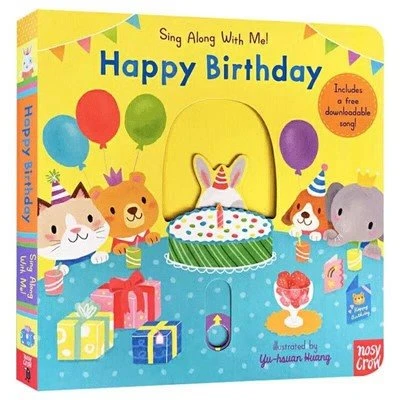
Now, not all story books are created equal when it comes to vocabulary development. As a story book supplier, I’ve seen first-hand that the books that drive the most vocabulary growth are those that balance relatable, child-friendly plots with just the right number of new words—not too many that it becomes overwhelming, not too few that it doesn’t stretch kids. For example, a board book for 1-year-olds should have 1 or 2 new words per page, focused on concrete nouns they can see (like “bear,” “book,” “milk”), while a book for 4- to 5-year-olds can introduce more abstract words (like “courage,” “kindness,” “curiosity”) and nuanced verbs (like “hesitate,” “whisper,” “celebrate”). We’ve worked with speech-language pathologists to curate our collection, making sure each title has a “vocabulary growth metric” that tells educators and parents exactly how many new words a typical child can expect to learn from reading it. We’ve also found that interactive story books—those that have repetition, questions, or opportunities for the child to participate—boost vocabulary even more. A book like Brown Bear, Brown Bear, What Do You See? uses repetitive phrases that let kids chime in, which helps them practice saying new words out loud, a key step in moving from receptive to expressive vocabulary.
There’s also the social aspect of story book reading that plays a big role in vocabulary development. When an adult reads a story with a child, they often pause to ask questions, define words in simple terms, or connect new words to things the child already knows. For example, if they read a word like “forage,” the adult might say, “That’s like when you look for your toy car all around the living room, but this is when squirrels look for acorns to store for winter.” This “dialogic reading,” as it’s called in educational research, turns a passive activity of reading into an interactive one that reinforces new words. A 2022 meta-analysis of 50 different vocabulary studies found that story book reading with adult interaction was 2.5 times more effective than silent reading for kids’ vocabulary growth. That’s why we don’t just supply books—we also work with preschools and libraries to provide training for teachers and parents on how to do dialogic reading, like asking open-ended questions (“Why do you think the bear decided to hibernate?”) instead of yes/no questions, and expanding on a child’s use of a new word (“Yes, you said the rabbit kneaded the dough—what does kneading feel like?”).
Of course, there are critics who argue that in the age of tablets and audiobooks, physical story books don’t offer any extra vocabulary benefit. But research actually contradicts that. A 2020 study from the University of California, Los Angeles, compared vocabulary growth in kids who listened to audiobooks, read physical books on a tablet, or read physical paper books. The paper book group had the highest expressive vocabulary scores, because they could turn the pages at their own pace, point to pictures, and interact with the book in a more tactile way. Audiobooks, while still beneficial for listening comprehension, don’t give kids the visual context that helps them connect words to their meanings. The same study found that physical story books also encourage more one-on-one interaction between adults and kids, which as we already know, is key for vocabulary development. That’s why we prioritize high-quality, durable physical story books in our supply, especially for the high-traffic environments of preschools and community centers.
As someone who’s built this business over the past 12 years, I’ve seen the impact of story books on vocabulary first-hand, not just in data from studies, but in the kids who come back to us years later, telling us how a specific book helped them learn a word that changed how they see the world. I remember a 2018 order we filled for a Head Start program in rural Ohio; a teacher there told us that after her class read The Girl Who Loved Words, a story about a girl who collects unusual words, several of the kids started using words like “melancholy” and “ephemeral” in their play and in class discussions. That’s the kind of growth that flash cards just can’t produce. Vocabulary isn’t just about getting a good score on a test—it’s about being able to communicate your thoughts, understand others, and access new ideas. Story books are one of the most effective tools we have to help kids build that foundation.
If you’re a school administrator, librarian, or learning program coordinator looking to build a book collection that supports vocabulary development, we’d be happy to help. Our team works with educators to curate collections tailored to specific age groups, reading levels, and learning goals, with a focus on titles proven to boost vocabulary growth. We also offer resources like dialogic reading guides, vocabulary activity sheets, and professional development workshops to make sure your team gets the most out of every book you order. Whether you’re outfitting a new preschool library, restocking an elementary school’s collection, or building a home learning program for low-income families, we can help you find the right story books to meet your needs. To discuss your procurement needs or learn more about our curated collections, feel free to reach out to our team for a consultation.
Interactive Books References
National Early Literacy Panel. (2008). Developing early literacy: A report of the National Early Literacy Panel. National Institute for Literacy.
Journal of Educational Psychology. (2021). Vocabulary growth through storybook reading vs. flashcard instruction in preschoolers, 113(4), 789–805.
University of Oxford Department of Education. (2019). Narrative context and vocabulary retention in primary school children.
UCLA Graduate School of Education and Information Studies. (2020). The impact of physical books vs. digital media on early vocabulary development.
American Speech-Language-Hearing Association. (2022). Dialogic reading: Supporting vocabulary development in young children.
NINGBO LOTO PACKAGE MANUFACTORY CO.,LTD
Ningbo Sentu Art and Crafts Co., Ltd. is one of the most professional story books manufacturers and suppliers in China. With abundant experience, we warmly welcome you to buy high quality story books made in China here from our factory. If you have any enquiry about cooperation, please feel free to email us.
Address: 3rd Floor, Momi Community, New Jinfeng, No. 68, Chunchao Road, Yinzhou District, Ningbo City, Zhejiang Province, Ningbo, Zhejiang, China
E-mail: sales@nbprinting.com
WebSite: https://www.lotopuzzle.net/
