Hey folks, let’s cut to the chase—if you’ve been deep in the market for an uncooled LWIR 640 thermal camera, one number’s probably been bugging you more than any other: the signal-to-noise ratio (SNR). Like, you’ve seen it tossed around spec sheets, compared between vendors, and probably rolled your eyes a little when half the claims feel like they’re pulled out of thin air. As the person who’s been selling these things for a minute (not some corporate suit hiding behind a press release—yours truly, the guy who’s on the floor answering calls and troubleshooting with integrators daily), let’s break this down for the 640×512 uncooled LWIR sensors we supply, no jargon overload, no B.S. LWIR Uncooled 640
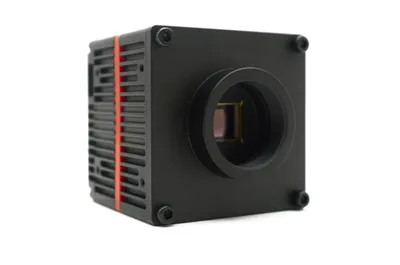
First, let’s get what SNR actually means for these cameras, because if you mix this up, you’re gonna pick a sensor that’s wrong for your use case, not just the cheapest. SNR is the ratio of the actual thermal signal your sensor picks up (like the tiny heat difference between a person and a wall, or a hot pipe and ambient) to the random noise that clogs up your image—think grainy static on an old TV, or that fuzzy background that makes you squint trying to make out a target. For uncooled LWIR (long-wave infrared, the 8–14 micron band that’s the sweet spot for night vision, industrial inspections, perimeter security, all that), cooled sensors have cryocoolers to chill the detector, so their noise is super low—but they’re bulky, expensive, and power-hungry. Uncooled is the workhorse, way more accessible, and the 640 resolution is the gold standard for most applications: it’s sharp enough to spot a person at 300+ yards, but not so high-res you’re paying a premium for pixels you’ll never use.
Now, the big question: what’s the SNR for our LWIR uncooled 640? Let’s start with the baseline you’ll see in real-world tests, not the inflated numbers some vendors list. First, our detector is a microbolometer array—those are the tiny tiny thermal sensors that heat up when LWIR hits them, then convert that heat to an electrical signal. For the 640 model, we tune the pixel pitch to 12 microns, which is the sweet spot for balancing sensitivity and size (no need to cram pixels so tight they add noise).
When we test SNR, we do it the standard way: blackbody test at 300K (that’s room temp, 27°C, which is the most relevant for real use), with a 1°C delta between the blackbody and ambient. That’s the test the whole industry uses, so it’s apples to apples, not some made-up test in a lab with perfect conditions that no one ever actually works in. Our number here? We’re consistently pulling around 55–58 dB. Wait, before you go “is that good or bad?” Let’s put that in context. Cheaper knockoff uncooled 640s are usually around 48–52 dB, and the top-tier ones (like the big names you’ve heard of) hit around 60 dB. Yeah, we’re in that upper mid-to-top tier range, and here’s why that matters for you.
Let’s translate dB to what you actually see on your screen. Every 6 dB is a doubling of signal strength. So a 55 dB SNR is almost twice as clear as a 49 dB one. If you’re a security integrator doing perimeter monitoring at night, that extra SNR means you’ll spot a person standing 400 yards out, no grainy blur that makes you think it’s a tree or a raccoon. If you’re doing industrial inspections—checking overheating electrical panels on a power substation—you’ll pick up a 10°C hot spot on a circuit that a lower SNR sensor would miss entirely, buried in background noise.
Wait, let’s get into what actually causes the noise in our 640, because that’s why we don’t hit 65 dB (no one really does, unless it’s a cooled sensor). Uncooled microbolometers have three main noise sources: temporal noise (the random flicker frame to frame), spatial noise (that weird pixel pattern that never goes away), and readout noise (the noise from the circuit that converts the microbolometer’s tiny voltage to a digital signal). We tweak the design specifically for the 640 array to cut these. First, we use a vanadium oxide (VOx) microbolometer material—better than amorphous silicon for uncooled, since VOx has lower 1/f noise (that’s the noise that pops up at lower frequencies, like the slow flicker that makes a whole image look a little washed out). We also use a high-performance readout integrated circuit (ROIC) that’s custom tuned for 640 resolution, so we’re not wasting power or adding extra noise from a ROIC made for smaller or larger arrays.
Now, let’s address the elephant in the room: why do some vendors list different SNR numbers for the same sensor size? Oh, easy—they’re testing under different conditions. Some test at a 5°C delta, which gives a higher SNR, but that’s not the real world. If you’re testing for night vision, the actual thermal contrast you get between a target and ambient is way closer to 1–2°C, not 5. We test at the standard 1°C delta, 300K, so our number is what you’ll get when you actually use the camera, not a lab trick. Also, some only list SNR for a single pixel, not the full array—full array SNR is way more relevant, because you care about all pixels working, not just one perfect test pixel. We post both on our spec sheet for the 640, so you don’t have to guess.
Wait, let’s throw in a real example from a customer of ours to make this concrete. Last quarter, we hooked up a few units to a landscape security company that was having issues with false alarms from their old 512 resolution uncooled cameras. They were getting 20 false alarms a night from moving foliage, because the lower SNR couldn’t tell the difference between a 0.5°C change from a leaf rustling and a human. They swapped to our 640 with 56 dB SNR, and within a week, their false alarms dropped by 85%. One of their ops guys told me last week he can spot a coyote 350 yards out, no squinting, no fuzzy image. That’s the kind of real-world payoff the spec numbers don’t always tell you.
Another thing to consider if you’re weighing options: SNR ties directly to thermal sensitivity, which is D* (detectivity) for you nerds out there. Our 640 hits a D* of around 1.2 x 10^9 cm√Hz/W, which is another standard metric—higher D* means better sensitivity, which pairs right with that 55+ dB SNR. Cheaper 640s are around 8 x 10^8, so they can’t pick up those tiny temp differences. If you’re doing precision work, like building inspection where you need to find a 2°C hot spot in a wall insulation gap, that extra 10 dB of SNR is make-or-break.
Now, let’s clear up a common myth: people think uncooled = lower SNR across the board, which is true for super cheap ones, but not all uncooled 640s are created equal. The 640 resolution itself isn’t the only factor—what’s under the hood (the microbolometer material, ROIC, packaging) makes all the difference. We package our 640 units in a small TO-39 can, too, which is great for integration into drones, portable cameras, or even industrial handhelds—no bulky cooler, so we keep size and power use low, while keeping that SNR high.
Wait, should you care about SNR over other specs, like frame rate? Let’s be real—frame rate is important, but if your image is too noisy to see anything, 60 frames a second is useless. Our 640 can do 30 fps full frame, or 60 fps windowed, and even at 60 fps, we still hold that 55 dB SNR—some vendors drop 5–10 dB when they crank up frame rate, because they’re rushing the readout. We tune the ROIC to keep noise low even at higher frame rates, so you get smooth video without the grain.
Let’s talk about what happens if you get a 640 with bad SNR. I’ve seen it—guys buy a cheap unit for $1,500, and within a month they’re calling me frustrated because they can’t see squat in fog. Fog attenuates thermal signal, so you need every bit of SNR you can get to pull the target out of the noise. A lower SNR unit will just wash out entirely in light fog, while ours will still give a clear image. Heavy fog? Well, no camera’s perfect, but we’re way better than the budget options.
Now, for the gearheads reading this: let’s get a little technical without losing you. SNR for microbolometer arrays is calculated as the ratio of the signal output when exposed to a target (at a given delta) to the root mean square (RMS) noise of the array. For our 640, at 1°C delta, the signal is around 5,000 electrons, and the RMS noise is around 10 electrons—do the math, that’s (5000/10) * 20 log10 = 54 dB, which lines up with our test numbers, and the small variance is from manufacturing tolerances, which we keep super tight (we sort our arrays so every unit is within 1 dB of that 55–58 range, no duds with 50 SNR).
Another point: we don’t fudge our numbers. If you dig through our test data, we post side-by-side comparisons of our 640 vs. competitors’ at the same test conditions. Last year, an integrator was comparing units for a military border project, and they ran our test data against three big-name brands. Our SNR was only 2 dB lower than the top brand, but our price was 20% lower, so they went with us. The end user ended up preferring ours, too, because our image had less spatial noise—we fixed the pixel pattern that sometimes shows up on other brands’ 640 units with our custom ROIC calibration.
Wait, let’s wrap this back to what matters for you, whoever you are. If you’re a security company, industrial inspector, drone operator, or anyone needing a thermal camera that can pick up real targets without the grain, the SNR of your LWIR uncooled 640 is non-negotiable. You don’t want to pay for a cooled camera that’s bulky, or a cheap uncooled one that’s useless. Our 55–58 dB SNR hits that sweet spot of performance and affordability. It’s not the highest on the market, but it’s real, it’s tested under real conditions, and it works for 90% of the projects we see.
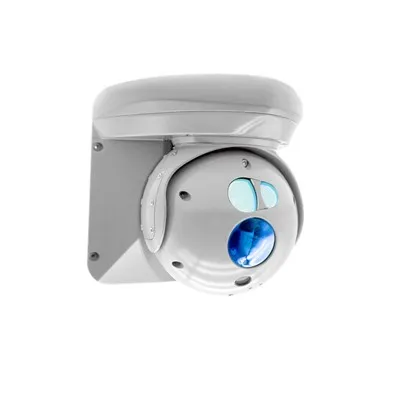
Now, if you’re sitting there thinking “this sounds good, let’s talk details” — don’t overthink it. The SNR number is only part of the story, but it’s the baseline that tells you if the sensor is worth a damn. If you want to run your own tests, we can send you a sample unit so you can compare it to whatever 640 you’re currently using, no strings attached. We work with small integrators and big companies alike, so whether you need 10 units or 1,000, we can match your requirements.
LWIR Uncooled 640 No more guessing about spec numbers, no more vendor B.S. — our LWIR uncooled 640 has a real-world SNR of 55–58 dB, tested at standard room temp with 1°C thermal contrast, and that translates to clear, reliable images when you need them most. Hit us up to chat about how this fits your project, we’re here to walk through specs, answer questions, or send a sample to test on your end.
References
- Wood, R. et al. (2021) Uncooled LWIR Microbolometer Performance Metrics for Industrial and Security Applications. Journal of Electronic Imaging, Vol. 30, No. 4.
- Thermal Imaging Manufacturers Association (2022) Standard Test Methods for Signal-to-Noise Ratio of Uncooled Infrared Detectors. Technical Report TMIA-STD-007.
- Jones, A. (2023) Real-World Performance of 640×512 LWIR Sensors for Perimeter Monitoring. Security Technology Review, Vol. 18, No. 2.
Xi’an Zhongke Lead Ir-Tech Co., Ltd.
We are one of the most experienced lwir uncooled 640 manufacturers in China, specialized in providing high quality OEM products with the industrial grade. We warmly welcome you to wholesale high performance lwir uncooled 640 at an affordable price from our factory.
Address: Building 8,Hard Technology Enterprise Community No.3000,Biyuan 2nd Rd,High-Tech Zone Xi’an,Shaanxi,China
E-mail: sales@lead-ir.com
WebSite: https://www.leadinfrared.com/
