As a supplier of backyard artificial turf, one question that frequently comes up from potential customers is: "Does backyard artificial turf attract insects?" It’s a valid concern, as no one wants their outdoor space to become a haven for bugs. In this blog post, I’ll delve into this topic from a scientific and practical perspective, drawing on my experience in the industry. Backyard Artificial Turf

Understanding the Insect – Attraction Mechanisms of Natural Grass
To understand the relationship between artificial turf and insects, it’s important to first look at why natural grass attracts insects. Natural grass provides a rich and diverse ecosystem. The soil beneath the grass is teeming with organic matter, which serves as a food source for many insects. Earthworms, for example, break down dead plant material in the soil, while grubs feed on the roots of the grass.
The blades of natural grass also offer shelter and breeding grounds. Many insects, such as grasshoppers and crickets, find the tall, dense grass to be an ideal place to hide from predators and lay their eggs. Additionally, natural grass requires regular watering, which creates a moist environment that is appealing to a variety of insects, including mosquitoes.
How Artificial Turf Differs from Natural Grass
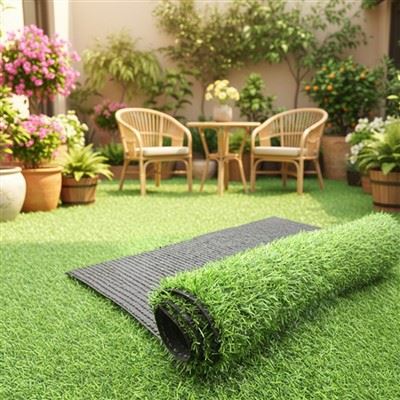
Backyard artificial turf is a synthetic alternative to natural grass. It is typically made from synthetic fibers such as polyethylene or polypropylene, which are designed to mimic the appearance and feel of real grass. Unlike natural grass, artificial turf does not have soil beneath it. Instead, it is installed on a base layer of crushed stone or rubber granules, which provides drainage and stability.
The lack of soil means that there is no organic matter for insects to feed on. Without a food source, many insects that are commonly found in natural grass, such as earthworms and grubs, will not be attracted to artificial turf. Moreover, artificial turf does not require watering like natural grass. This eliminates the moist environment that mosquitoes and other moisture – loving insects thrive in.
Insect – Resistant Features of Artificial Turf
Modern artificial turf is designed with several features that make it less attractive to insects. For instance, the synthetic fibers used in artificial turf are often treated with anti – microbial agents. These agents help to prevent the growth of fungi and bacteria, which can attract insects.
The smooth surface of artificial turf also makes it less appealing for insects to crawl and hide. Unlike natural grass, which has a complex structure of blades and stems, artificial turf has a more uniform surface. This makes it easier to spot and remove any insects that may land on it.
In addition, the installation process of artificial turf can be designed to further deter insects. A proper base layer with good drainage ensures that there is no standing water, which is a major attractant for mosquitoes. And by using a weed – barrier fabric beneath the turf, we can prevent the growth of weeds, which can also attract insects.
Situations Where Insects Might Be Attracted to Artificial Turf
While artificial turf is generally less attractive to insects than natural grass, there are still some situations where insects might be drawn to it. One such situation is if there is debris or organic matter on the surface of the turf. For example, fallen leaves, twigs, or food scraps can provide a food source for insects. If these are not regularly removed, they can attract ants, beetles, and other scavenging insects.
Another factor is the surrounding environment. If your backyard is close to a wooded area or a body of water, insects may be more likely to venture onto the artificial turf. Mosquitoes, for example, can fly from nearby ponds or swamps and land on the turf. Even though the turf itself is not an ideal habitat for them, it can still serve as a resting place.
What to Do if Insects Appear on Your Backyard Artificial Turf
If you notice insects on your artificial turf, the first step is to determine the type of insects and the possible cause of their presence. If it’s a small number of insects, simply using a broom or a leaf blower to remove any debris on the turf can often solve the problem. This gets rid of their potential food source.
For more persistent insect problems, such as a mosquito infestation, you can use insect repellents that are safe for use on artificial turf. There are also professional pest control services that can treat the area without damaging the turf.
Benefits of Choosing Backyard Artificial Turf Despite the Minor Insect Risks
Despite the potential for minor insect issues, there are numerous benefits to choosing backyard artificial turf. First and foremost, it offers a low – maintenance alternative to natural grass. You no longer have to mow, fertilize, or water the grass, which saves you time and money.
Artificial turf also provides a consistent and attractive appearance throughout the year. It stays green and lush, regardless of the weather conditions. This is especially beneficial in areas with harsh climates, where natural grass may struggle to grow.
In addition, artificial turf is more durable than natural grass. It can withstand heavy foot traffic, making it ideal for families with children and pets. And because it doesn’t require the use of pesticides and fertilizers, it is a more environmentally friendly option.
Conclusion and Call to Action
In conclusion, while backyard artificial turf is generally less attractive to insects than natural grass, there are still some situations where insects might be present. However, with proper maintenance and a few preventive measures, these issues can be easily managed.
Residential Lawn If you’re considering upgrading your backyard with artificial turf, I encourage you to reach out. As a supplier, I have a wide range of high – quality artificial turf products to suit your specific needs. Whether you’re looking for a soft, realistic turf for a play area or a durable turf for a sports field, I can help you make the right choice. Contact me to start a discussion about your project and explore the possibilities of transforming your backyard with artificial turf.
References
- "Insect Ecology" by Peter W. Price. This book provides a comprehensive overview of insect behavior and their relationships with different habitats.
- Industry reports from leading artificial turf manufacturers, which offer insights into the design and features of modern artificial turf products in relation to insect resistance.
Yiwu Duofu Artificial Flower Co., Ltd.
As one of the most professional backyard artificial turf manufacturers and suppliers in China, our products have good reputation in the market. Please feel free to wholesale bulk custom made backyard artificial turf from our factory. Good service and quality products are available.
Address: Building B, No. 566 Chunhua Road
E-mail: 13373813738@aliyun.com
WebSite: https://www.chinaturffactory.com/
