Hey there! I’m a supplier of Delta robots, and let me tell you, the world of these nifty machines is evolving at a breakneck pace. In this blog, I’ll share some of the latest technological advancements in Delta robots that are making waves in the industry. Delta Robot
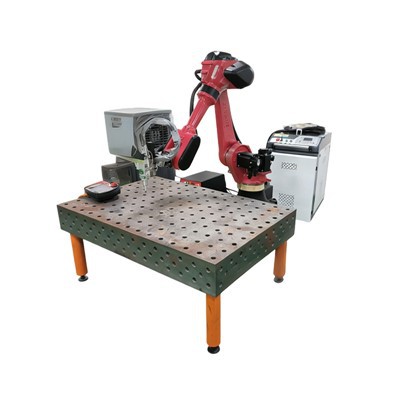
1. Improved Speed and Precision
One of the biggest areas of development in Delta robots is speed and precision. In the past, these robots were already pretty fast, but recent tech has taken things to a whole new level. New motor designs and control algorithms are allowing Delta robots to move even quicker and with more accuracy.
For example, the use of high – torque, low – inertia motors has become more common. These motors can accelerate and decelerate rapidly, which means the robot can pick and place items in a shorter amount of time. And when it comes to precision, advanced feedback systems are being used. These systems use sensors to constantly measure the position of the robot’s end – effector and make real – time adjustments. This ensures that the robot can place items with an accuracy of just a few millimeters, or even less in some cases.
This improvement in speed and precision is a game – changer for industries like food packaging. Imagine a food production line where Delta robots can pick up delicate pastries and place them in boxes at a super – fast rate without damaging them. It not only increases productivity but also reduces waste.
2. Enhanced Vision Systems
Vision systems are another area where there have been some really cool advancements. Delta robots are now being equipped with state – of – the – art cameras and image – processing software.
These cameras can see in high resolution and in different lighting conditions. They can detect the shape, size, color, and position of objects on the conveyor belt or in a bin. The image – processing software then analyzes this data and tells the robot exactly where to pick up the object.
Some of the latest vision systems can even recognize objects in 3D. This is a huge advantage when dealing with irregularly shaped items. For instance, in the electronics industry, where components can have all sorts of strange shapes, a 3D vision system allows the Delta robot to accurately pick up and assemble these parts.
Moreover, the integration of artificial intelligence (AI) into vision systems is becoming more prevalent. AI algorithms can learn from past data and improve the robot’s object recognition over time. This means that as the robot encounters more and more objects, it gets better at identifying and handling them.
3. Increased Flexibility
Delta robots are becoming more flexible in terms of their applications. In the past, they were mainly used for simple pick – and – place tasks. But now, with new end – effectors and programming techniques, they can do a whole lot more.
New types of end – effectors are being developed. For example, there are grippers that can adjust their grip force depending on the object they are holding. This is great for handling fragile items like glassware or soft fruits. There are also suction cups that can be customized for different shapes and sizes of objects.
In addition, programming these robots has become easier. Instead of having to write complex code, operators can use intuitive graphical user interfaces (GUIs). These GUIs allow them to quickly teach the robot new tasks. For example, an operator can simply drag and drop the steps of a new pick – and – place sequence on the screen, and the robot will learn how to perform it.
This increased flexibility makes Delta robots suitable for a wider range of industries. They can be used in the pharmaceutical industry for handling small vials, in the automotive industry for assembling small parts, and even in the e – commerce industry for order fulfillment.
4. Connectivity and Industry 4.0 Integration
In today’s world, connectivity is key, and Delta robots are no exception. They are now being designed to be part of the Industry 4.0 ecosystem.
These robots can be connected to the Internet, allowing operators to monitor and control them remotely. For example, if there is a problem with a robot on a production line in another city, an engineer can access the robot’s data and make adjustments without having to be on – site.
They can also be integrated with other machines in the factory. For instance, a Delta robot can communicate with a conveyor belt to synchronize the picking and placing process. This integration improves the overall efficiency of the production line.
In addition, the data collected by the robot can be analyzed using big data analytics. This helps in predictive maintenance. By analyzing the robot’s performance data, operators can predict when a component is likely to fail and replace it before it causes a breakdown. This reduces downtime and saves costs in the long run.
5. Compact and Lightweight Designs
There’s been a trend towards making Delta robots more compact and lightweight. This is mainly to meet the needs of smaller factories and limited – space applications.
New materials are being used to reduce the weight of the robot without sacrificing its strength. For example, carbon fiber composites are being used in some parts of the robot’s structure. These materials are not only strong but also much lighter than traditional metals.
A compact and lightweight design also makes the robot easier to install and move around. Smaller factories can now afford to use Delta robots because they don’t need a large amount of space. And if a factory needs to reconfigure its production line, the robot can be easily relocated.
Why You Should Consider Our Delta Robots
With all these amazing technological advancements, our Delta robots are in a league of their own. If you’re in the market for a high – performance, flexible, and reliable robot for your production line, we’ve got you covered.
Our robots come with the latest speed and precision improvements, so you can expect increased productivity and reduced waste. The enhanced vision systems ensure that your robot can handle even the most complex object – picking tasks. The flexibility allows you to adapt the robot to different applications as your business grows.
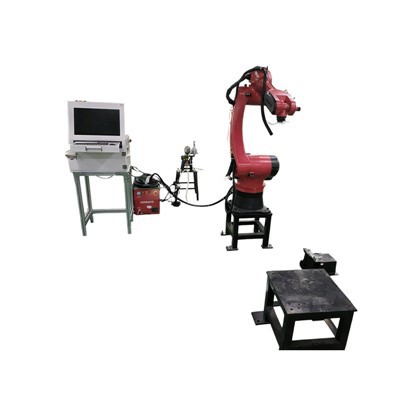
And with the connectivity and Industry 4.0 integration, you’ll be able to stay ahead of the curve in terms of factory automation. The compact and lightweight designs make installation a breeze, even in the tightest of spaces.
Delta Robot If you’re interested in learning more about how our Delta robots can benefit your business, or if you want to discuss a specific application, don’t hesitate to get in touch. We’d be more than happy to have a chat with you and see how we can help you take your production to the next level.
References
- "Advances in Robotics Technology" – A research paper on the latest developments in industrial robots.
- "The Future of Factory Automation" – An industry report discussing the role of Delta robots in Industry 4.0.
- Manufacturer datasheets of various Delta robots highlighting their new features and improvements.
Dongguan Chuanglida Intelligent Equipments Co., Ltd.
As one of the most professional delta robot manufacturers and suppliers in China, we also support customized service. Please feel free to buy discount delta robot in stock here from our factory. For price consultation, contact us.
Address: Room 201, Building 2, No. 61, Shachang 1st Road, Dalang Town, Dongguan City, Guangdong Province
E-mail: haoguangli001@outlook.com
WebSite: https://www.boruntestech.com/
