Can cement testing instruments be remotely controlled?
If you’ve ever walked the floor of a modern cement quality control lab, you’ll have watched the same play out dozens of times: a technician setting up a cement compressive strength test, waiting hours for the curing cycle to complete, then manually recording results from the testing press, cross-checking numbers in a binder, and filling out a log that’s eventually scanned and stored in a quality management system. It’s routine work, sure—but it’s also work that’s ripe for change. As a supplier of cement testing instruments, I get this question constantly from lab managers, quality directors, and even small batch plant owners: Can cement testing instruments actually be remotely controlled? And if so, does it work for the specific, often high-stakes requirements of cement testing? Cement Testing Instrument
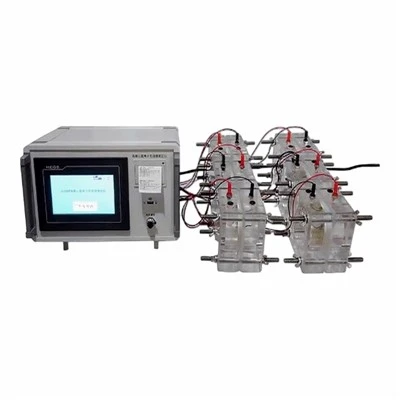
I’ll start with the short answer today: Yes, it works, and for most labs, it’s already changing how we approach quality control. But let’s break this down beyond the generic “remote control” you might use to dim a kitchen light—cement testing is precise, regulated, and relies on repeatable, traceable results, so remote operation can’t cut corners. It has to meet the exact standards set by groups like ASTM International, the European Committee for Standardization (CEN), and the International Organization for Standardization (ISO), which govern every step of cement testing.
Let’s first address what “remote control” means in this context. It’s not just flipping a switch from another room. For our cement compressive strength testers, for example, remote control lets a lab manager at a corporate headquarters start a test run at a regional lab 300 miles away, adjust test parameters, pull real-time load data, and flag anomalies before a test even finishes. For automated cement mortar mixers, which need to follow exact water-to-cement ratios and mixing times per ASTM C305, remote operation eliminates human error from manual setup—no more mismeasuring water or stopping the mixer 10 seconds early because a lab tech glanced at a timer wrong.
When we first started integrating remote capabilities into our instruments a decade ago, early adopters were large cement producers with multiple regional labs. One mid-sized company we work with, which has five labs across the Midwest, used to have to send a senior lab technician to each of their smaller labs once a quarter for calibration checks and test oversight. The travel time cost them thousands of dollars a month in labor and downtime. Since we rolled out remote access to their test instruments, they’ve cut that travel spend by 70%, and they’ve reduced test turnaround time for customer batch releases by an average of 24 hours. That’s a tangible win, but it’s not just about cost. It’s about consistency.
Cement quality is a make-or-break factor for construction projects. A wrong compressive strength test can lead to a batch of cement being rejected unnecessarily, or worse, a batch that fails to meet specs going out to a job site. Remote control creates an audit trail that’s impossible to fake or misrecord. Every adjustment to a test, every time a load cell is calibrated, every data point captured during a strength test—all of it is timestamped, stored in a secure cloud server, and linked to the test sample’s unique ID. That’s critical for labs that are audited quarterly to meet ISO 17025 standards, which require full traceability of all testing processes.
But remote control isn’t perfect, and it’s not for every lab. Let’s talk about the limitations. First, you need a reliable internet connection. A lab in a remote area with spotty cellular service might struggle with real-time remote operation, though we’ve started offering offline modes that store test data locally and sync it once service is restored. Second, not all cement tests are suited for remote control. Tests like the Vicat needle test, which measures cement setting time, require a technician to physically observe the needle penetration and adjust the device in small, precise increments—at least for now. We’re still working on refining the automation for that, but even so, the data from that test can be logged remotely as soon as it’s captured, eliminating manual data entry errors.
Another common concern from small lab owners: Is remote control secure? We built our remote access system with industry-standard end-to-end encryption, and every user has a unique login with role-based permissions. A frontline lab tech can only start tests and view basic data; a lab manager can adjust test parameters and approve test results; a corporate auditor can pull full audit trails without being able to alter any data. That’s not a afterthought—we designed it that way from the start, because we knew that cement test data is confidential, and it’s often subject to regulatory scrutiny.
I’ll admit, in the early days, some of our customers were skeptical. One lab manager at a small ready-mix plant told me, “I’ve been running these tests for 15 years with my own two hands—why would I trust a screen thousands of miles away?” We worked with him to test a remote-controlled compressive strength test side-by-side with his manual process. Over 100 sample tests, the results matched within 0.5%—well within the acceptable margin for ASTM standards. That’s when he switched, and now he uses remote control to start tests while he’s on site at his plant, or even to pull test data on his commute.
So what does remote operation look like in day-to-day use for a lab tech? Let’s walk through a typical workflow. A technician receives a shipment of cement clinker from a new producer, prepares three test mortars per ASTM C109, and places them in the curing chamber. Instead of waiting 24 hours to remove them and run the strength test, she logs into the remote control portal from her desktop, selects the correct test standard, and starts the test. The instrument automatically retrieves the sample ID from a bar code on the curing chamber, adjusts the test speed to 2.5 mm per minute (the required rate for C109), and starts applying load. Every two seconds, the load and displacement data is sent to the portal, so the technician can watch the test progress in real time. If the load deviates even 1% from the expected curve, the system sends an alert to her phone, and she can remotely pause the test to check the sample. Once the test finishes, the results are automatically saved to the lab’s quality management system, and she doesn’t have to enter a single number manually.
That automation doesn’t just save time—it reduces human error. Studies from the National Ready Mixed Concrete Association show that manual data entry errors in cement testing occur in about 3% of all tests, which can lead to costly batch rejections. Remote control eliminates that step entirely, because data is captured digitally from the instrument’s load cell and sensors, no transcribing required. For labs that process thousands of tests a year, that adds up to hundreds of hours of saved labor and fewer costly mistakes.
Now, let’s talk about the future. We’re currently developing remote predictive maintenance capabilities for our instruments. That means a lab manager can get an alert via their portal when a load cell is approaching its calibration limit, or when a mixer’s motor is showing unusual vibration, before it fails mid-test. We’re also integrating remote control with cement plant management software, so test results can automatically trigger adjustments to raw material ratios at the plant, creating a closed-loop system from production to testing.
But here’s the thing: remote control isn’t about replacing lab technicians. It’s about giving them tools to do their jobs better. The technician in that example I mentioned earlier? She still needs to prepare the samples, check that the curing chamber is set to the right temperature, and troubleshoot if a sample isn’t seated properly. Remote control just takes the repetitive, time-consuming parts of the job out of the lab, so techs can focus on the parts that require expertise—analyzing results, troubleshooting anomalies, and ensuring that cement meets the required specs.
I’ve spent 12 years in the cement testing instrument industry, and I’ve seen how small, consistent changes can have a huge impact on quality and efficiency. When we first launched remote capability, it felt like a nice add-on. Today, it’s a core feature that most of our customers can’t imagine working without. That’s because cement testing is never just “testing”—it’s the backbone of construction, of building bridges, skyscrapers, and homes that last for decades. If our instruments can make that process more consistent, more traceable, and more efficient, that’s a win for everyone.

If you’re a lab manager, quality director, or plant owner who’s curious about how remote control could work for your cement testing instruments, we’d love to connect. We can walk you through case studies, show you how the system integrates with your existing lab software, and help you find a solution that fits your specific needs. Don’t hesitate to reach out to discuss how we can support your quality control goals.
References
Special Mechanical Test Machines ASTM International. Standard Test Method for Compressive Strength of Hydraulic Cement Mortars. ASTM C109/C109M – 21a, 2021.
International Organization for Standardization. General Requirements for the Competence of Testing and Calibration Laboratories. ISO/IEC 17025:2017, 2017.
National Ready Mixed Concrete Association. Test Accuracy in Ready Mixed Concrete Quality Control. NRMCA Report 2022, 2022.
European Committee for Standardization. Cement Tests – Determination of Setting Time and Soundness. EN 196-3:2016, 2016.
Hebei Wanluda Testing Instrument Equipment Co., Ltd.
As one of the most professional cement testing instrument manufacturers and suppliers in China, we have world-leading production equipment and strong manufacturing capabilities. Please rest assured to buy advanced cement testing instrument made in China here from our factory.
Address: Zhouguantun Village, Xian County, Cangzhou City, Hebei Province, P.R.China
E-mail: wldinstrument@163.com
WebSite: https://www.wldinstrument.com/
