If you’re running a facility management team, industrial automation setup, or even a smart building project, you’ve probably invested a decent chunk of change in wired sensor switches. As someone who’s been supplying these bad boys for over 10 years, I can’t tell you how often I get calls from clients panicking because their switches died out of nowhere—no warning, just a dead line in their system. Most of the time, it’s not the switch itself failing; it’s preventable damage that we could’ve avoided. Today, I’m breaking down exactly how to protect your wired sensor switches so you don’t end up out of commission, scrambling for a replacement at 2 a.m. Wired Sensor Switch
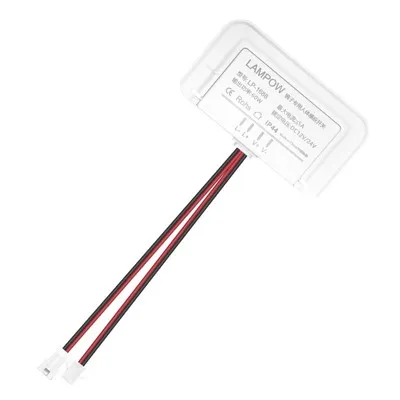
First, let’s get one thing straight: wired sensor switches aren’t indestructible. I see it all the time—clients cut corners on installation, skip basic maintenance, or throw them in environments they just aren’t built for, and then blame the product. Half the time, a little due diligence adds years to their lifespan, no fancy upgrades required. Let’s start with the big one: installation mistakes that cause 60% of the damage I see.
I get why people rush through setup—you’ve got deadlines, crews rotating, maybe you’re working with a smaller team that’s not super electric-savvy. But here’s the thing: messy wiring is the number one killer of wired sensor switches. Think about it: if you’re running the switch between a power source and a sensor, frayed wires, loose terminal screws, or wrong gauge wire will cause voltage spikes, overheating, or even short circuits that fry the whole unit. I once had a client who used 22-gauge wire for a 15A switch because they had it lying around in their toolbox. That’s just asking for trouble—too thin a gauge can’t handle the current, so it overheats, and the switch takes the hit. Pro tip: always check the switch’s specs for required wire gauge. Most of our standard switches call for 14 or 16 gauge, so don’t guess—pull the data sheet (we send ’em free with every order, fyi) and double-check.
Another installation fail: not sealing the right spots. A lot of clients mount their switches in outdoor areas, utility closets, or near industrial machinery that kicks up dust, moisture, or chemicals, then leave the cable entry points open. Water and electricity do not mix, even for “water-resistant” switches. I’ve seen switches that survived a sprinkler system leak just fine, but those same switches died in 3 months because dust got into the wiring cavity and caused corrosion. So, when you mount the switch, make sure you use the right sealant—silicone caulk works for most outdoor setups, but if you’re in a super dusty factory, you might need a cable gland that compresses tight around the wire to keep debris out. Also, never mount the switch directly on a surface that gets wet, like a concrete wall in a basement—leave a half-inch gap behind it for air circulation. Heat buildup is just as bad as water, and if you’re pressing the switch flush to a hot wall, it’ll degrade the internal components way faster.
Next up: environment-related damage, which is where a lot of people drop the ball. Not every wired sensor switch is built for every job. We have clients that use our basic indoor switches for everything from cold storage (-20°F to 140°F) to hot forge rooms (up to 200°F), and wonder why they’re failing. The specs are there for a reason—if your switch is rated for -40°C, don’t use it in a freezer that hits -50°C; if it’s rated for dry indoor use, don’t stick it in a chemical plant where it’ll get sprayed with coolant. Even if you “think” it’s fine, extreme temps shrink or expand the internal connections, moisture condenses inside the casing, and constant vibration from a conveyor belt or delivery bay can loosen components over time.
Speaking of vibration: that’s a big one for industrial settings. If your switch is mounted on a moving machine, even the smallest constant shake will wear down the soldered connections inside the unit. I recommend adding vibration-damping washers between the switch and its mounting surface—they’re cheap, take 2 minutes to install, and reduce the stress on internal parts by a ton. Also, avoid routing wiring near power cables that run heavy equipment—electromagnetic interference (EMI) from those can mess with the switch’s signal, but more importantly, the induced current can cause tiny surges that add up over time. If you have to run the switch cable near power lines, use shielded cable (we sell it separately, no upcharge for bulk orders) and ground the shield properly. That’s a fix that costs pennies and saves you thousands in replacement switches.
Now, maintenance—something most clients treat as an afterthought, but it’s the easiest way to catch damage before it happens. I know, you’re busy, you don’t want to check every switch every week. But a 5-minute quarterly check is way better than a full replacement. What do you even look for? First, visual checks: is the casing cracked, or is there corrosion around the terminals? If you see a tiny crack, moisture is already getting in—fix it now before it spreads. Second, test the connection: use a multimeter to check voltage at the switch and the sensor. If the voltage is dropping more than 10% from the source, there’s a loose wire or a bad connection somewhere. Third, clean the outside—just wipe the casing down with a dry cloth, no harsh chemicals. Chemical cleaners can eat away at the seal on some switches, so stick to plain water or a mild soap if needed.
Wait, and don’t forget surge protection. I’ve had clients swear their switches are fine because they’re not near lightning, but small surges from power grid fluctuations, or even turning on a heavy machine in the same circuit, will take out a switch. Adding a surge protector between the power source and the switch is a no-brainer. It’s like an insurance policy for your wired sensor—if a surge comes through, the protector blows instead of the switch. We recommend type 2 surge protectors for most indoor and outdoor setups, and they’re super easy to install, no electrician required if you’re comfortable with basic wiring.
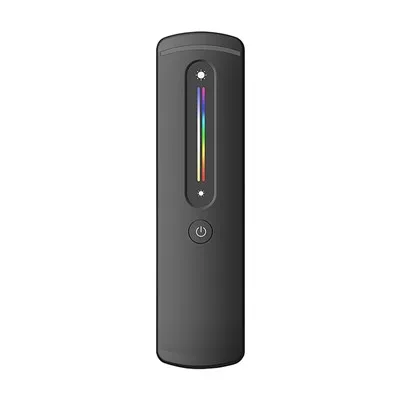
I get it—some of these tips feel like overkill, especially if you’ve been using wired sensors for years without issues. But here’s the truth: I’ve seen a $50 switch get ruined by a $0.10 frayed wire, and a $100 switch last 10 years because the client took the time to seal it properly. At the end of the day, protecting your wired sensor switches isn’t hard—it’s just being intentional about how you install, place, and check them.
Wireless Sensor Switch If you’re unsure about your current setup, or you need help picking the right switch for your environment, feel free to reach out. We don’t push cheap, low-quality parts just to make a sale—we’d rather you get a switch that works for your needs, so you don’t have to call us back 6 months later for a replacement. Whether you’re upgrading your entire system or just need a few replacements, we can work with you to find the right solution. Don’t wait until your next switch fails—tackle the small stuff now, and you’ll save yourself a lot of stress (and money) down the line.
References
- Industrial Sensor Switch Installation Best Practices, National Electrical Manufacturers Association (NEMA), 2022
- Environmental Durability Standards for Wired Sensors, International Electrotechnical Commission (IEC), 2021
- Preventive Maintenance Guidelines for Automation Components, International Society of Automation (ISA), 2020
- Electrical Surge Protection for Low-Voltage Devices, Underwriters Laboratories (UL), 2023
Dongguan Lanbaoli Intelligent Technology Co., Ltd.
As one of the most professional wired sensor switch manufacturers and suppliers in China, we’re featured by quality products and low price. Welcome to buy advanced wired sensor switch for sale here from our factory. If you have any enquiry about quotation, please feel free to email us.
Address: 10th Floor, Building 32, Golden Town, No. 7 Technology Avenue, Houjie Town, Dongguan City, Guangdong Province
E-mail: anna@lampow.cn
WebSite: https://www.lblsensor.com/
